
Al Pastor Recipe
Oh my goodness, I am so thrilled to finally share my Al Pastor recipe with you! This isn’t just another dinner idea; it’s an invitation to bring the vibrant, delicious flavors of a Mexican taqueria right into your own kitchen. What makes this recipe truly special, you ask? It’s the magical transformation that happens when tender beef is bathed in a rich, deeply flavorful marinade, infused with chiles, aromatic spices, and a hint of achiote for that signature color and earthy taste. Trust me, the aroma alone will make your mouth water!
You are going to absolutely love this Al Pastor recipe because it delivers on every single level. Imagine biting into perfectly cooked, thinly sliced beef, charred just right, with sweet, caramelized pineapple and fresh cilantro. It’s a symphony of savory, sweet, and tangy notes that will have you feeling like a culinary genius. It’s impressive enough to serve guests but simple enough for a weeknight treat, and it brings such a joyful, authentic taste of Mexico right to your table without needing any alcohol in the preparation.
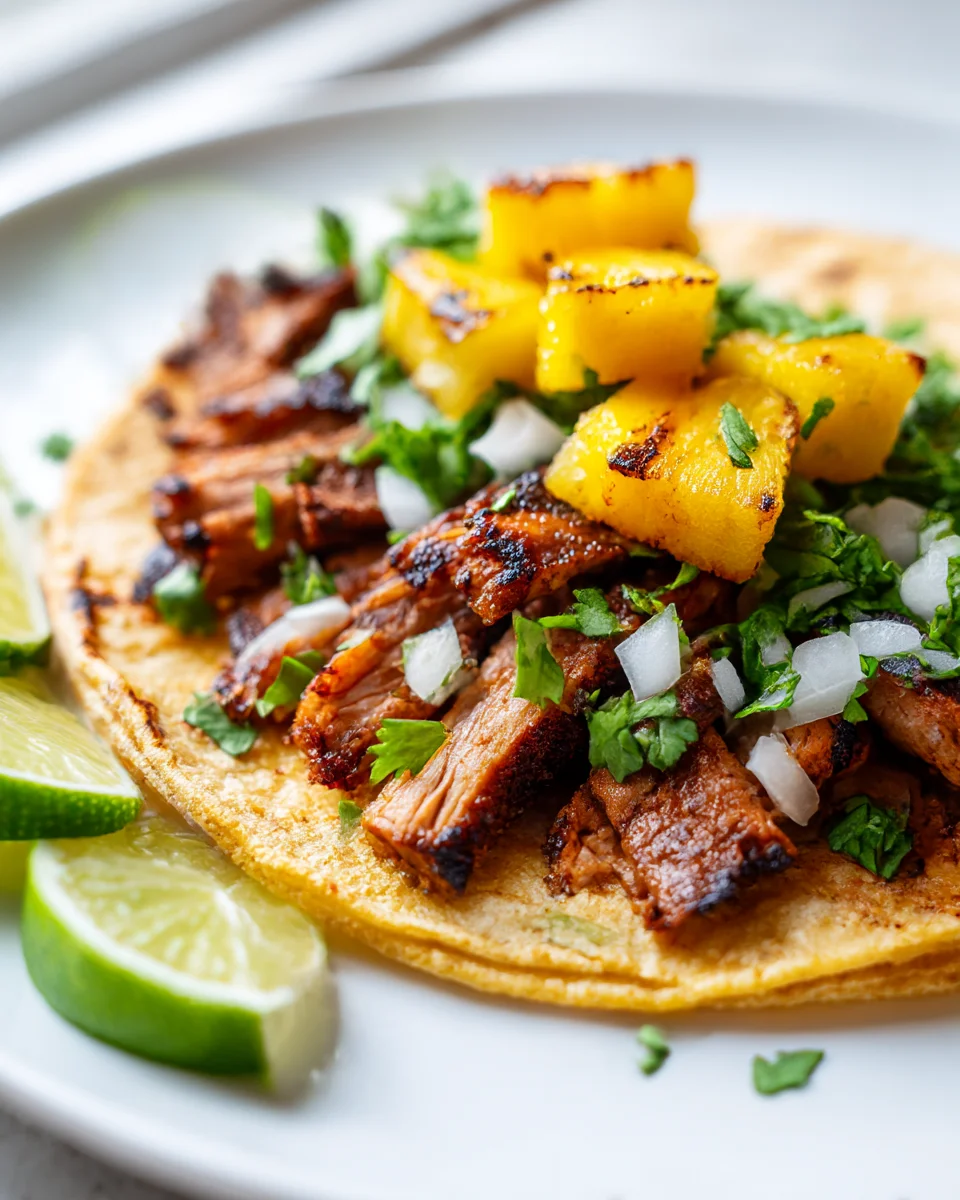
So, what exactly is Al Pastor? In short, it’s a truly iconic dish featuring thin cuts of beef that have been marinated in that incredible blend of spices and chiles, often with pineapple. Traditionally, it’s cooked on a vertical spit (a “trompo”), but I’ll show you how to get that amazing flavor and texture right at home. It’s typically served in warm tortillas with a generous sprinkle of onion, cilantro, and a squeeze of lime – the perfect taco experience!
Ingredient Notes
Crafting incredible Al Pastor at home is a rewarding experience, and it all starts with understanding your ingredients. While traditional Al Pastor uses pork, I’ve adapted this recipe to feature succulent beef, ensuring all the signature flavors are present and accounted for.
- The Beef: For this Al Pastor, I love using about 2-2.5 pounds of thinly sliced beef. My go-to cuts are sirloin or top round, sliced against the grain into thin, bite-sized pieces or even very thin steaks. You can ask your butcher to slice it for you, or partially freeze the beef at home to make slicing easier. Thinness is key for tenderness and maximum flavor absorption from the marinade.
- Dried Chiles (Guajillo & Ancho): These are the heart of the marinade. I typically use 4-5 dried Guajillo chiles and 2-3 dried Ancho chiles. Guajillos provide a mild, fruity, and slightly tangy flavor, while Anchos contribute a deeper, smoky, and richer sweetness. Always make sure to de-stem and deseed them before rehydrating in hot water until pliable.
- Achiote Paste: This vibrant orange-red paste is non-negotiable for authentic Al Pastor flavor and color. It’s made from annatto seeds and adds an earthy, slightly peppery, and subtly sweet note. You can find it in most Latin American markets. If using annatto seeds instead, you’ll need to toast and grind them, then blend with a little water or oil to form a paste.
- Fresh Pineapple: Crucial for both flavor and texture! I recommend using about 1 cup of fresh pineapple chunks for the marinade and more for cooking and serving. The enzymes in fresh pineapple naturally tenderize the beef, and its sweet-tartness perfectly balances the rich chiles and spices.
- Vinegar & Citrus: White vinegar, apple cider vinegar, or even a splash of orange juice and lime juice provide essential acidity to brighten the flavors and aid in tenderizing the beef. I typically use about 1/4 cup of white vinegar and the juice of one orange or lime.
- Aromatics & Spices: Onion (half a small one), a few cloves of garlic, cumin, Mexican oregano, a pinch of ground cloves, and a tiny dash of cinnamon are what give Al Pastor its distinctive aromatic profile. Mexican oregano has a more earthy, citrusy flavor than Mediterranean oregano, so use it if you can find it.
- Sweetener (Optional): A touch of brown sugar or piloncillo can help balance the acidity and heat, and contribute to caramelization during cooking. I sometimes add a tablespoon if my pineapple isn’t super sweet.
Step-by-Step Instructions
Making Al Pastor at home might seem daunting, but I promise it’s incredibly rewarding. Here’s how I break it down for delicious results without a vertical spit.
1. Prepare the Chiles
- First, I de-stem and deseed my dried Guajillo and Ancho chiles. This helps control the heat and ensures a smooth marinade.
- Then, I place the cleaned chiles in a heatproof bowl and cover them with boiling hot water. I let them soak for about 15-20 minutes, or until they are soft and pliable. Once rehydrated, I drain them, reserving about a quarter cup of the soaking liquid just in case I need to thin out the marinade later.
2. Blend the Marinade
- In a blender, I combine the rehydrated chiles, achiote paste, fresh pineapple chunks, white vinegar, orange juice, onion, garlic cloves, cumin, Mexican oregano, ground cloves, and cinnamon.
- I blend on high speed until the mixture is completely smooth. If it’s too thick, I add a tablespoon or two of the reserved chile soaking liquid (or a little water) until it reaches a consistency that will easily coat the beef. I taste and adjust for salt, and sometimes add a pinch of brown sugar if I want a touch more sweetness.
3. Marinate the Beef
- I place my thinly sliced beef into a large, non-reactive bowl or a resealable bag.
- Then, I pour the entire marinade over the beef, ensuring every piece is thoroughly coated. I use my hands to really work the marinade into the beef.
- I cover the bowl or seal the bag and refrigerate it for at least 4 hours, but ideally overnight (8-12 hours). The longer it marinates, the more tender and flavorful your Al Pastor will be.
4. Cook the Al Pastor
Since most of us don’t have a trompo (vertical spit) at home, I’ve found a few methods that work beautifully:
- Skillet or Cast Iron Griddle Method: This is my preferred method for ease and flavor. I heat a large cast iron skillet or griddle over medium-high heat until it’s quite hot. I add a tablespoon of oil, then cook the marinated beef in batches, ensuring not to overcrowd the pan. Cooking in batches allows the beef to sear and develop those delicious charred edges, rather than just steaming. I cook each batch for 3-5 minutes, stirring frequently, until it’s cooked through and nicely caramelized.
- Oven Roasting Method: For a more hands-off approach, you can skewer the beef onto a metal skewer, stacking the pieces similar to a trompo, with a slice of pineapple on top. Place the skewer upright in a baking dish or on a wire rack set over a baking sheet. Roast in a preheated oven at 400°F (200°C) for 30-45 minutes, turning occasionally, until cooked through. For extra char, you can finish under the broiler for a few minutes. Then, I slice it directly off the skewer.
5. Cook the Pineapple (for serving)
- While the beef is cooking, I like to dice some fresh pineapple into small pieces.
- In a separate pan or on the same griddle after the beef, I quickly cook these pineapple pieces over medium-high heat for a few minutes until they are slightly caramelized and warmed through. This really brings out their sweetness.
6. Serve
- Once the beef is cooked, I finely chop it into small, taco-friendly pieces.
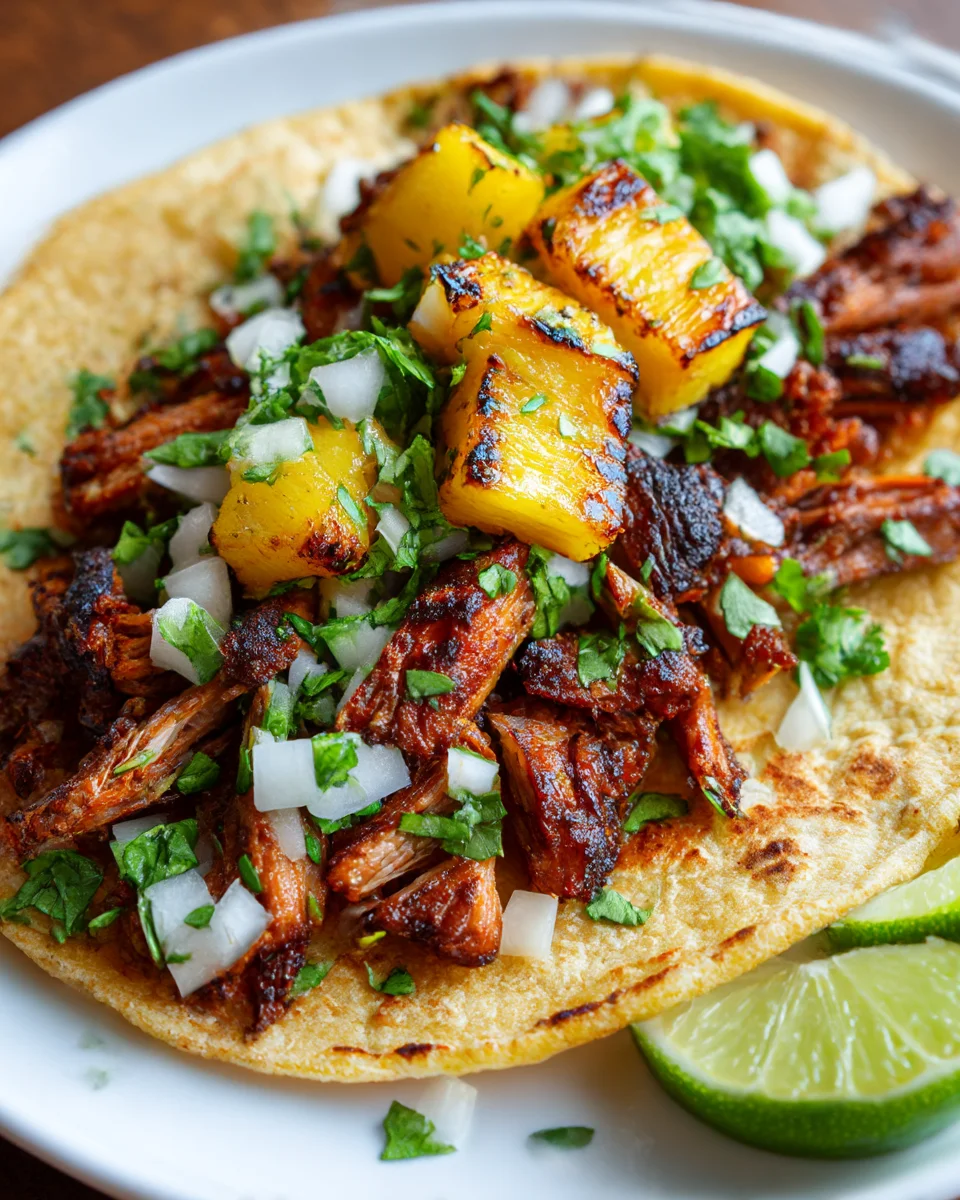
- I usually serve my Al Pastor in warm corn tortillas, topped with the cooked pineapple, finely diced white onion, fresh cilantro, and a squeeze of lime juice. A good salsa verde or avocado salsa is always a welcome addition!
Tips & Suggestions
Making delicious Al Pastor at home is all about a few key techniques and considerations. Here are some of my top tips to help you get the best results:
- Don’t Skimp on Marination Time: For beef, marinating for at least 8 hours, or ideally overnight, makes a huge difference. The acidity from the pineapple and vinegar, along with the enzymes in the fresh pineapple, really work wonders in tenderizing the beef and infusing it with flavor.
- Fresh Pineapple is Essential: While canned pineapple might seem convenient, it lacks the fresh enzymes necessary for tenderizing the beef and often has a different flavor profile. Stick to fresh pineapple for both the marinade and the cooked topping.
- Achieving That Signature Char: Whether you’re using a skillet, grill, or oven, getting some slightly crispy, charred edges on your beef is crucial for that authentic Al Pastor taste. Don’t overcrowd your pan or grill, and allow the meat to sit undisturbed for a few minutes on each side to develop that beautiful caramelization. If using the oven, a quick blast under the broiler at the end works wonders.
- Slice Thinly: No matter the cut of beef, slicing it as thinly as possible against the grain will ensure a more tender bite and better absorption of the marinade. This is especially important since we’re not using a traditional vertical rotisserie to slowly cook and shave the meat.
- Taste and Adjust: Always taste your marinade before adding the beef! This is your chance to adjust the salt, acidity, or even add a pinch more spice. Everyone’s palate is different, so make it your own.
- Serving Versatility: While Al Pastor tacos are iconic, this flavorful beef is also fantastic in quesadillas, burritos, over rice bowls, or even on nachos. Don’t be afraid to get creative with how you enjoy it!
- Garnish Generously: The fresh toppings truly complete the Al Pastor experience. Diced white onion, plenty of fresh cilantro, and a generous squeeze of lime juice are non-negotiable in my book. A spicy salsa or a creamy avocado sauce can take it to the next level.
Storage
Proper storage ensures you can enjoy your delicious Al Pastor leftovers safely and deliciously.
- Refrigeration: Cooked Al Pastor beef, once cooled, should be transferred to an airtight container and stored in the refrigerator. It will stay fresh for about 3-4 days. I often find the flavors deepen a bit overnight, making it even more delicious the next day.
- Freezing Cooked Al Pastor: Yes, you can freeze cooked Al Pastor! I like to portion it into individual servings before placing it in freezer-safe airtight containers or heavy-duty freezer bags. It can be stored in the freezer for up to 2-3 months. Thaw overnight in the refrigerator before reheating.
- Reheating: For best results, reheat Al Pastor on the stovetop in a skillet over medium heat with a splash of water or broth to prevent it from drying out. Stir frequently until heated through. You can also microwave it, but it might not retain the same texture.
- Marinated Raw Beef: While you can freeze the raw marinated beef, I generally advise against it if possible. Freezing and thawing raw meat that has been marinated, especially with pineapple, can sometimes affect the texture negatively upon thawing. It’s usually better to cook it first and then freeze the cooked Al Pastor.
Final Thoughts
Well, we’ve come to the end of our culinary adventure, and I hope you’re feeling incredibly proud of what you’ve accomplished! I truly believe that this Al Pastor Recipe is more than just a dish; it’s an experience. The way the vibrant, non-alcoholic marinade tenderizes and infuses the beef with those incredible sweet, savory, and tangy notes, perfected by the slow roast or grill, is simply unparalleled.
It’s the perfect harmony of smoky guajillo, earthy achiote, and the bright sweetness of pineapple that makes every bite sing. I promise you, the effort you put into preparing this dish will be rewarded tenfold with a flavor explosion that transports you straight to a bustling taqueria. Trust me, once you try this incredible Al Pastor Recipe, you’ll understand why it’s destined to become a staple in your kitchen. Go ahead, gather your loved ones, and savor the magic you’ve created!

Authentic Beef Al Pastor Recipe: Mexican Street Food Flavor
- Total Time: 45 minutes
- Yield: 4 servings 1x
Description
Experience the vibrant flavors of a Mexican taqueria with this Authentic Beef Al Pastor recipe. Tender beef marinated in a rich blend of spices and fresh pineapple creates a deliciously unforgettable dish.
Ingredients
- 2–2.5 pounds of thinly sliced beef (sirloin or top round)
- 4–5 dried Guajillo chiles
- 2–3 dried Ancho chiles
- Achiote paste
- 1 cup of fresh pineapple chunks (for marinade and more for cooking and serving)
- 1/4 cup of white vinegar
- Juice of one orange or lime
- Half a small onion
- A few cloves of garlic
- Cumin
- Mexican oregano
- A pinch of ground cloves
- A tiny dash of cinnamon
- Brown sugar or piloncillo (optional, about 1 tablespoon)
Instructions
- De-stem and deseed the dried Guajillo and Ancho chiles.
- Place the cleaned chiles in a heatproof bowl and cover them with boiling hot water. Let them soak for about 15-20 minutes until soft and pliable. Drain and reserve about a quarter cup of the soaking liquid.
- In a blender, combine the rehydrated chiles, achiote paste, fresh pineapple chunks, white vinegar, orange juice, onion, garlic cloves, cumin, Mexican oregano, ground cloves, and cinnamon. Blend on high speed until smooth, adding reserved soaking liquid if necessary to thin out the marinade.
- Place the thinly sliced beef into a large, non-reactive bowl or resealable bag. Pour the marinade over the beef, ensuring every piece is coated. Cover or seal and refrigerate for at least 4 hours, ideally overnight.
- To cook, heat a large cast iron skillet or griddle over medium-high heat. Add a tablespoon of oil and cook the marinated beef in batches for 3-5 minutes until cooked through and caramelized.
- Alternatively, skewer the beef onto a metal skewer with a slice of pineapple on top and roast in a preheated oven at 400°F (200°C) for 30-45 minutes, turning occasionally.
- While the beef is cooking, dice some fresh pineapple and cook in a separate pan until caramelized.
- Once the beef is cooked, chop it into small pieces and serve in warm corn tortillas topped with cooked pineapple, diced onion, fresh cilantro, and a squeeze of lime juice.
- Prep Time: 15 mins
- Cook Time: 30 mins
- Category: Dinner
- Method: Skillet or Oven Roasting
- Cuisine: Mexican
Nutrition
- Serving Size: 1 taco
- Calories: 350
- Sugar: 8 g
- Sodium: 600 mg
- Fat: 15 g
- Saturated Fat: 5 g
- Unsaturated Fat: 8 g
- Trans Fat: 0 g
- Carbohydrates: 30 g
- Fiber: 2 g
- Protein: 25 g
- Cholesterol: 70 mg
Keywords: Marinate the beef for at least 8 hours for maximum tenderness and flavor. Use fresh pineapple for the best results, and don't overcrowd the pan while cooking to achieve that signature char.
Leave a Comment