
Salmon Avocado Sushi
Oh, prepare yourselves for a real treat because today, we’re diving headfirst into the glorious world of homemade Salmon Avocado Sushi! I absolutely adore this recipe, and I have a feeling you will too. What makes this dish so incredibly special, you ask? Well, it’s the perfect harmony of rich, buttery salmon, creamy, dreamy avocado, and perfectly seasoned sushi rice, all coming together in a bite-sized piece of heaven. It’s a culinary masterpiece that feels fancy but is surprisingly simple to whip up right in your own kitchen.
You’re going to love making this because not only is it ridiculously delicious and satisfying, but it’s also a fantastic way to enjoy restaurant-quality sushi without the hefty price tag. Plus, there’s something wonderfully rewarding about crafting your own fresh sushi rolls! Imagine vibrant slices of salmon and lush avocado nestled on a bed of sticky rice, often wrapped in nori – it’s fresh, flavorful, and so much fun. Get ready to impress your taste buds and perhaps even a few friends with this absolute winner!
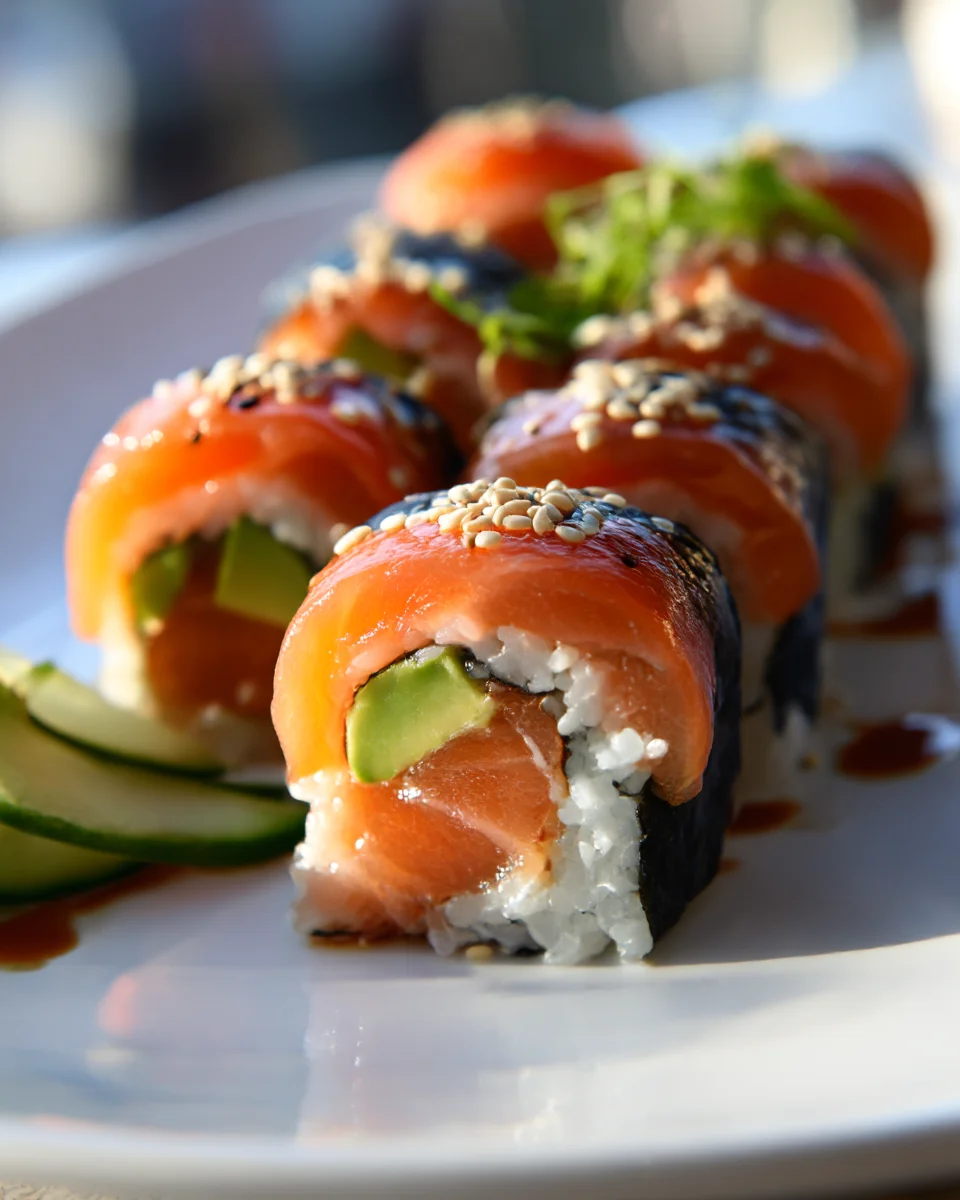
Welcome to the wonderful world of homemade sushi! Today, we’re diving into one of my all-time favorites: Salmon Avocado Sushi. This classic combination is not just incredibly delicious, but it’s also surprisingly fun to make at home. The creamy richness of fresh avocado pairs perfectly with the buttery texture of high-quality salmon, all wrapped up in perfectly seasoned sushi rice and crisp nori. Get ready to impress your taste buds and maybe even your friends and family with these vibrant, flavor-packed rolls. It might seem a little intimidating at first, but I promise, with a little patience and these clear steps, you’ll be rolling like a pro in no time!
Ingredient Notes
Crafting delicious Salmon Avocado Sushi starts with selecting the right ingredients. Each component plays a crucial role in the final flavor and texture, so I always recommend sourcing the best quality you can find, especially when it comes to the fish. Here’s a breakdown of what you’ll need and some thoughts on substitutions.
- Sushi Rice: This is the foundation of your sushi. You absolutely must use short-grain Japanese sushi rice. It has the right starch content to become sticky and hold its shape once cooked and seasoned. Regular long-grain rice or even medium-grain rice simply won’t work as effectively for sushi; it won’t have that signature stickiness.
- Nori (Seaweed Sheets): These are the edible seaweed wrappers. Look for good quality, crisp sheets specifically labeled for sushi. A good nori sheet will be dark green, slightly shiny, and flexible without easily tearing.
- Sushi-Grade Salmon: This is the star of our show, and it’s critical. When eating raw fish, you must purchase salmon that is specifically labeled “sushi-grade,” “sashimi-grade,” or “for raw consumption” from a reputable fishmonger. This ensures it has been handled and frozen safely to eliminate parasites. Do not use regular grocery store salmon unless it carries this specific designation for raw consumption. The texture should be firm and vibrant in color.
- Avocado: A ripe but firm avocado is key here. It should yield slightly to gentle pressure but not be mushy. The creamy texture of avocado is a perfect counterpoint to the salmon and rice. I love using Hass avocados for their rich, buttery flavor.
- Rice Vinegar: This is essential for seasoning your sushi rice. It provides the characteristic tangy flavor. Look for unseasoned rice vinegar, as we’ll be adding our own sugar and salt.
- Sugar & Salt: These are used to season the rice vinegar, creating the perfect balance of sweet, salty, and tangy for your sushi rice.
Substitutions:
- For Sushi-Grade Salmon: While salmon is ideal, you could substitute with other sushi-grade fish like tuna (for a classic tuna-avocado roll) or even yellowtail (hamachi). If you prefer not to use raw fish, smoked salmon can be a delicious alternative, offering a different but equally delightful flavor and texture. Just be aware that smoked salmon tends to be saltier, so you might adjust your soy sauce usage.
- For Avocado: If you’re not an avocado fan or want to add more texture, thinly sliced cucumber or even crisp bell pepper strips can work well. For a sweeter twist, ripe mango can be surprisingly good, especially with salmon.
- For Nori: Some people aren’t keen on the taste or texture of seaweed. In this case, soy paper (available in various colors) is an excellent substitute. It’s often used in specialty rolls and offers a very mild, almost neutral flavor.
- For Rice Vinegar (and seasoning): While specific sushi rice vinegar is best, if you’re in a pinch, apple cider vinegar can be used as a substitute. You’ll want to use a little less, and ensure you taste and adjust the sugar and salt balance, as apple cider vinegar can be more assertive. As for the seasoning, some recipes call for Mirin, an alcoholic rice wine. If you’re avoiding alcohol, simply omit it and ensure you achieve the desired balance of sweetness and tang from your rice vinegar, sugar, and salt mixture. There are also non-alcoholic Mirin alternatives available that can add a similar subtle sweetness and umami.
Step-by-Step Instructions
Making Salmon Avocado Sushi is a process, but each step is straightforward. Patience and a little attention to detail will yield fantastic results. Let’s roll!
- Prepare the Sushi Rice:
- Measure 2 cups of sushi rice into a fine-mesh sieve or a large bowl. Rinse the rice under cold running water, gently swirling it with your hand, until the water runs clear. This removes excess starch, which is crucial for fluffy, non-gummy rice.
- Transfer the rinsed rice to a rice cooker or a heavy-bottomed pot. Add 2 cups of cold water. If using a pot, bring it to a boil, then reduce heat to low, cover tightly, and simmer for 15 minutes. Remove from heat and let it sit, covered, for another 10-15 minutes to steam through.
- While the rice is cooking, prepare the sushi seasoning (sushi-zu). In a small saucepan, combine 1/2 cup rice vinegar, 2 tablespoons granulated sugar, and 1 teaspoon salt. Heat gently over low heat, stirring until the sugar and salt are fully dissolved. Do not boil. Let it cool slightly.
- Once the rice is cooked, transfer it to a large, non-metallic bowl (a wooden hangiri is traditional, but a glass or ceramic bowl works too). Gradually pour the cooled sushi-zu over the hot rice. Using a rice paddle or a flat wooden spoon, gently fold and “cut” through the rice to distribute the seasoning evenly. Do not mash. Fan the rice (with a small fan or piece of cardboard) as you mix to cool it quickly and give it a shiny appearance. The rice should be warm, not hot, when you start rolling. Cover with a damp cloth to prevent drying.
- Prepare the Fillings:
- Salmon: Place your sushi-grade salmon fillet on a clean cutting board. Using a very sharp, long knife, slice the salmon against the grain into thin, even strips, about 1/4 inch thick and the length of your nori sheet (or slightly shorter).
- Avocado: Cut the avocado in half, remove the pit, and gently scoop out the flesh. Place the avocado flat side down and slice it into thin strips, similar in size to your salmon pieces.
- Assemble Your Sushi Rolls:
- Lay a bamboo sushi rolling mat flat on your work surface. If you don’t have one, you can use a clean kitchen towel covered with plastic wrap. Place one sheet of nori, shiny side down, on the mat, orienting it so the longer side is horizontal.
- Dip your hands in a bowl of water (vinegar water is even better – mix 1 cup water with 1 tablespoon rice vinegar) to prevent the rice from sticking. Take about 3/4 to 1 cup of warm sushi rice and spread it evenly over the nori, leaving about a 1/2-inch strip of nori bare at the top (the edge furthest from you). Don’t press too hard; just spread it gently to cover.
- Arrange your salmon and avocado strips in a line across the center of the rice-covered nori. Don’t overfill! A single layer is usually sufficient.
- Now, the rolling. Lift the edge of the bamboo mat closest to you, bringing it up and over the filling. Gently tuck the edge of the nori and rice under the filling, creating a tight log. As you roll, apply gentle, even pressure with your fingers to keep the roll compact. Continue rolling forward, lifting the mat as you go, until the roll is complete. Give the roll a final gentle squeeze along its length to ensure it’s firm.
- Dampen the un-rice-covered edge of the nori with a tiny bit of water to help seal the roll.
- Slice and Serve:
- Place the finished sushi roll on a clean cutting board. Dip a very sharp knife into water (or vinegar water) and wipe off excess. Slice the roll in half, then slice each half into 3 or 4 even pieces (usually 6-8 pieces per roll). Re-wet and wipe your knife after every couple of cuts for cleaner slices.
- Arrange your beautiful Salmon Avocado Sushi pieces on a serving platter. Serve immediately with soy sauce, wasabi (if you like a kick), and pickled ginger.
Tips & Suggestions
Making sushi is an art form that gets easier with practice. Here are some of my top tips to help you achieve perfect Salmon Avocado Sushi rolls every time:
- The Right Rice is Everything: I cannot stress this enough – use genuine short-grain Japanese sushi rice. Its unique texture and stickiness are what make sushi, sushi. Avoid substituting with other rice types, as they simply won’t hold up.
- Don’t Overcook or Undercook Rice: Follow the rice cooking instructions carefully. Overcooked rice becomes mushy; undercooked rice is too hard. The ideal sushi rice is tender yet firm, with each grain distinct but sticky enough to hold together.
- Warm Rice for Seasoning: It’s important to season your rice while it’s still warm (not hot, not cold). The warmth helps the rice absorb the sushi-zu effectively, giving it that characteristic glossy finish and balanced flavor.
- Keep Your Hands and Knife Wet: This is a game-changer! Dipping your hands in water (or vinegar water) before handling the rice prevents it from sticking to you. Similarly, wetting your knife before slicing the rolls ensures clean, crisp cuts and prevents the rice and fillings from dragging. Re-wet and wipe your knife frequently.
- Don’t Overfill Your Rolls: It’s tempting to pack in lots of delicious salmon and avocado, but an overstuffed roll is much harder to close and slice neatly. Stick to a moderate amount of filling to ensure a firm, manageable roll.
- Gentle, Even Pressure When Rolling: Apply consistent, gentle pressure as you roll the sushi. This compacts the ingredients without squashing them, creating a tight roll that won’t fall apart when cut or picked up.
- Sharp Knife is Key: A dull knife will tear the nori and smash your ingredients, making for messy sushi. Use the sharpest knife you have, preferably a long, thin-bladed one designed for slicing fish or sushi.
- Get Creative with Add-ins: While Salmon Avocado is a classic, feel free to personalize! A thin smear of cream cheese adds extra richness, a sprinkle of toasted sesame seeds on the outside adds nutty flavor and texture, or a drizzle of spicy mayonnaise (mayonnaise mixed with sriracha) can give it a delicious kick.
- Practice Makes Perfect: Your first roll might not be restaurant-perfect, and that’s absolutely fine! Each roll you make will get better. Don’t be discouraged if it takes a few tries to get the hang of it.
- Fish Safety: Always, always use sushi-grade salmon. This is non-negotiable for raw fish consumption to ensure safety and prevent foodborne illness. If you have any doubts, opt for smoked salmon instead.
Storage
While homemade Salmon Avocado Sushi is undeniably best enjoyed immediately after it’s made, sometimes you might have a few pieces left over, or you might be preparing it slightly ahead of time. Here’s how to handle storage, keeping in mind the delicate nature of sushi ingredients.
- Best Eaten Fresh: I cannot emphasize enough that sushi, especially with raw fish and fresh avocado, is truly at its peak when consumed within an hour or two of preparation. The rice is perfectly pliable, the nori is crisp, the salmon is fresh, and the avocado is vibrant.
- Short-Term Refrigeration (Raw Salmon): If you must store leftover Salmon Avocado Sushi containing raw fish, it’s critical to do so safely and for a very limited time.
- Place the sushi in an airtight container. This is crucial to prevent the rice from drying out and absorbing odors from your fridge.
- Refrigerate immediately at 40°F (4°C) or below.
- Consume within 24 hours. After this point, the quality of the raw fish rapidly declines, and the risk of bacterial growth increases. Use your best judgment; if anything smells or looks off, it’s best to discard it.
- Changes During Storage: Be aware that the texture and flavor of your sushi will change in the refrigerator:
- Rice: Sushi rice, when cold, tends to harden and lose its characteristic soft, chewy texture. It becomes firmer and less pleasant to eat.
- Nori: The seaweed wrapper will absorb moisture from the rice and the air, becoming soft and chewy rather than crisp.
- Avocado: The avocado will inevitably begin to oxidize and turn brown. While still safe to eat, it won’t look as appetizing. A squeeze of lemon juice on the avocado slices before rolling can help slow this process slightly, but it won’t stop it entirely.
- Salmon: While safely stored sushi-grade salmon can last for 24 hours, its fresh “buttery” flavor will diminish, and the texture may become slightly firmer.
- Reheating is Not Recommended: Sushi is not meant to be reheated. Warming it up would further compromise the texture of the rice and fish, and it’s generally not safe for raw fish.
- Not Suitable for Freezing: Do not attempt to freeze Salmon Avocado Sushi. The freezing and thawing process will completely ruin the texture of the rice, fish, and avocado, turning them into an unappetizing mush.
So, my best advice for Salmon Avocado Sushi storage is simply this: make only what you intend to eat fresh! If you happen to have a few pieces left, store them correctly and enjoy them the very next day, understanding that they won’t be quite as perfect as when they were first made.
Final Thoughts
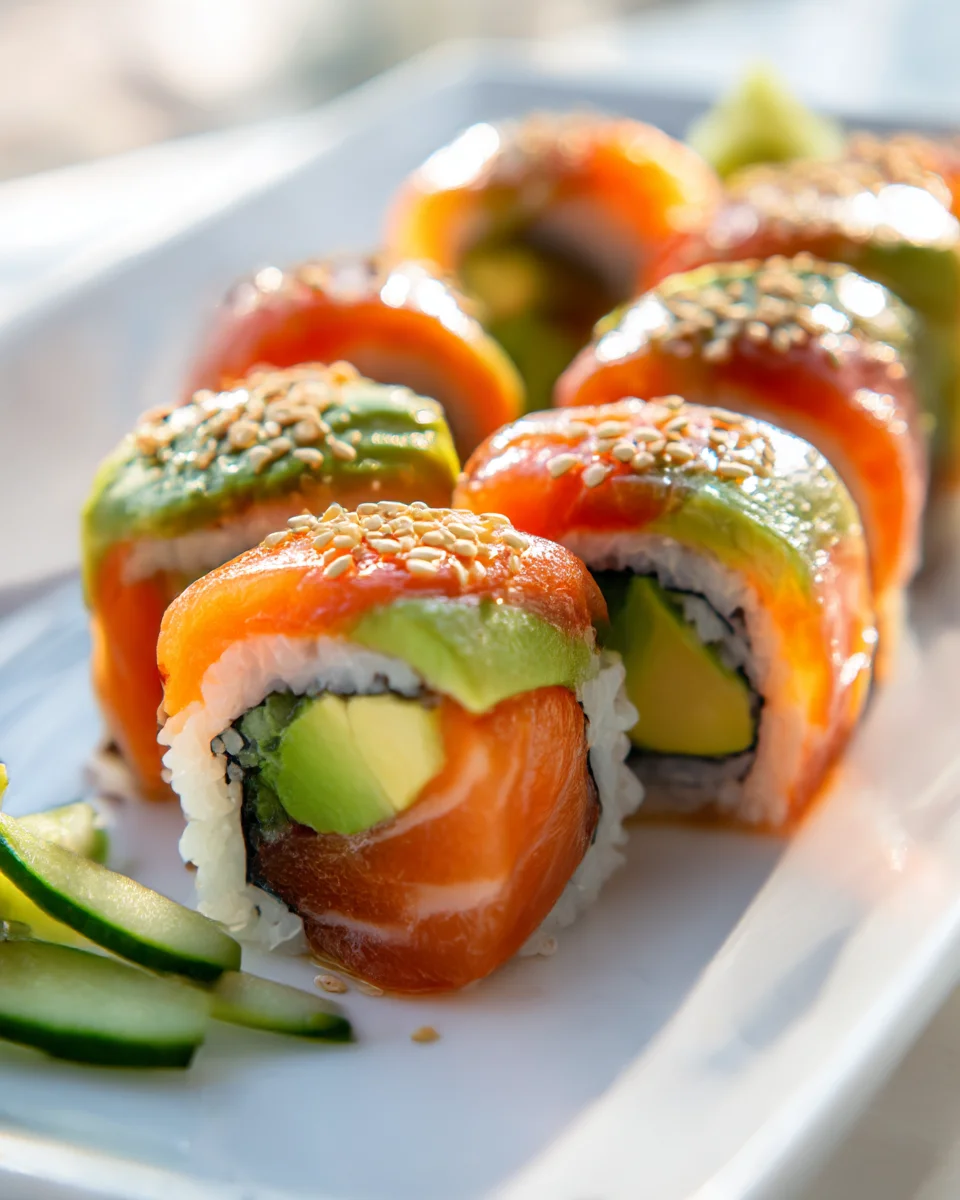
So there you have it – your very own homemade Salmon Avocado Sushi. I truly believe that this recipe offers an unparalleled taste experience that you simply have to try for yourself. The luxurious creaminess of the avocado, the rich, melt-in-your-mouth salmon, and the perfectly seasoned rice come together in a symphony of flavors and textures that is both refreshing and incredibly satisfying. It’s not just a meal; it’s a delightful journey for your taste buds, surprisingly easy to achieve right in your own kitchen. I promise you, once you taste your fresh, homemade Salmon Avocado Sushi, you’ll understand why it’s a go-to favorite for so many. Get ready to impress yourself and anyone you share this wonderful dish with!

Salmon Avocado Sushi Rolls: Easy Homemade Recipe!
- Total Time: 45 minutes
- Yield: 4 servings 1x
Description
Dive into the delightful world of homemade Salmon Avocado Sushi, where rich salmon meets creamy avocado on a bed of perfectly seasoned sushi rice. This recipe is not only delicious but also a fun way to enjoy restaurant-quality sushi at home.
Ingredients
- 2 cups sushi rice
- 2 cups cold water
- 1/2 cup rice vinegar
- 2 tablespoons granulated sugar
- 1 teaspoon salt
- Nori (seaweed sheets)
- Sushi-grade salmon
- 1 ripe avocado
Instructions
- Measure 2 cups of sushi rice into a fine-mesh sieve or a large bowl. Rinse the rice under cold running water, gently swirling it with your hand, until the water runs clear.
- Transfer the rinsed rice to a rice cooker or a heavy-bottomed pot. Add 2 cups of cold water. If using a pot, bring it to a boil, then reduce heat to low, cover tightly, and simmer for 15 minutes. Remove from heat and let it sit, covered, for another 10-15 minutes.
- In a small saucepan, combine 1/2 cup rice vinegar, 2 tablespoons granulated sugar, and 1 teaspoon salt. Heat gently over low heat, stirring until the sugar and salt are fully dissolved. Let it cool slightly.
- Once the rice is cooked, transfer it to a large, non-metallic bowl. Gradually pour the cooled sushi-zu over the hot rice. Using a rice paddle or a flat wooden spoon, gently fold and 'cut' through the rice to distribute the seasoning evenly. Fan the rice as you mix to cool it quickly and give it a shiny appearance.
- Place your sushi-grade salmon fillet on a clean cutting board. Using a very sharp, long knife, slice the salmon against the grain into thin strips, about 1/4 inch thick.
- Cut the avocado in half, remove the pit, and gently scoop out the flesh. Slice it into thin strips.
- Lay a bamboo sushi rolling mat flat on your work surface. Place one sheet of nori, shiny side down, on the mat.
- Dip your hands in a bowl of water to prevent the rice from sticking. Take about 3/4 to 1 cup of warm sushi rice and spread it evenly over the nori, leaving about a 1/2-inch strip of nori bare at the top.
- Arrange your salmon and avocado strips in a line across the center of the rice-covered nori.
- Lift the edge of the bamboo mat closest to you, bringing it up and over the filling. Gently tuck the edge of the nori and rice under the filling, creating a tight log. Continue rolling forward until the roll is complete.
- Dampen the un-rice-covered edge of the nori with a tiny bit of water to help seal the roll.
- Place the finished sushi roll on a clean cutting board. Dip a very sharp knife into water and slice the roll in half, then slice each half into 3 or 4 even pieces.
- Arrange your beautiful Salmon Avocado Sushi pieces on a serving platter. Serve immediately with soy sauce, wasabi, and pickled ginger.
- Prep Time: 30 mins
- Cook Time: 15 mins
- Category: Dinner
- Method: Rolling
- Cuisine: Japanese
Nutrition
- Serving Size: 1 roll
- Calories: 250
- Sugar: 1 g
- Sodium: 300 mg
- Fat: 10 g
- Saturated Fat: 1.5 g
- Unsaturated Fat: 8 g
- Trans Fat: 0 g
- Carbohydrates: 30 g
- Fiber: 2 g
- Protein: 10 g
- Cholesterol: 30 mg
Keywords: Use genuine short-grain Japanese sushi rice for the best results. Always use sushi-grade salmon for safety when consuming raw fish.

Leave a Comment