
Tender Beef Sauerkraut And Noodles
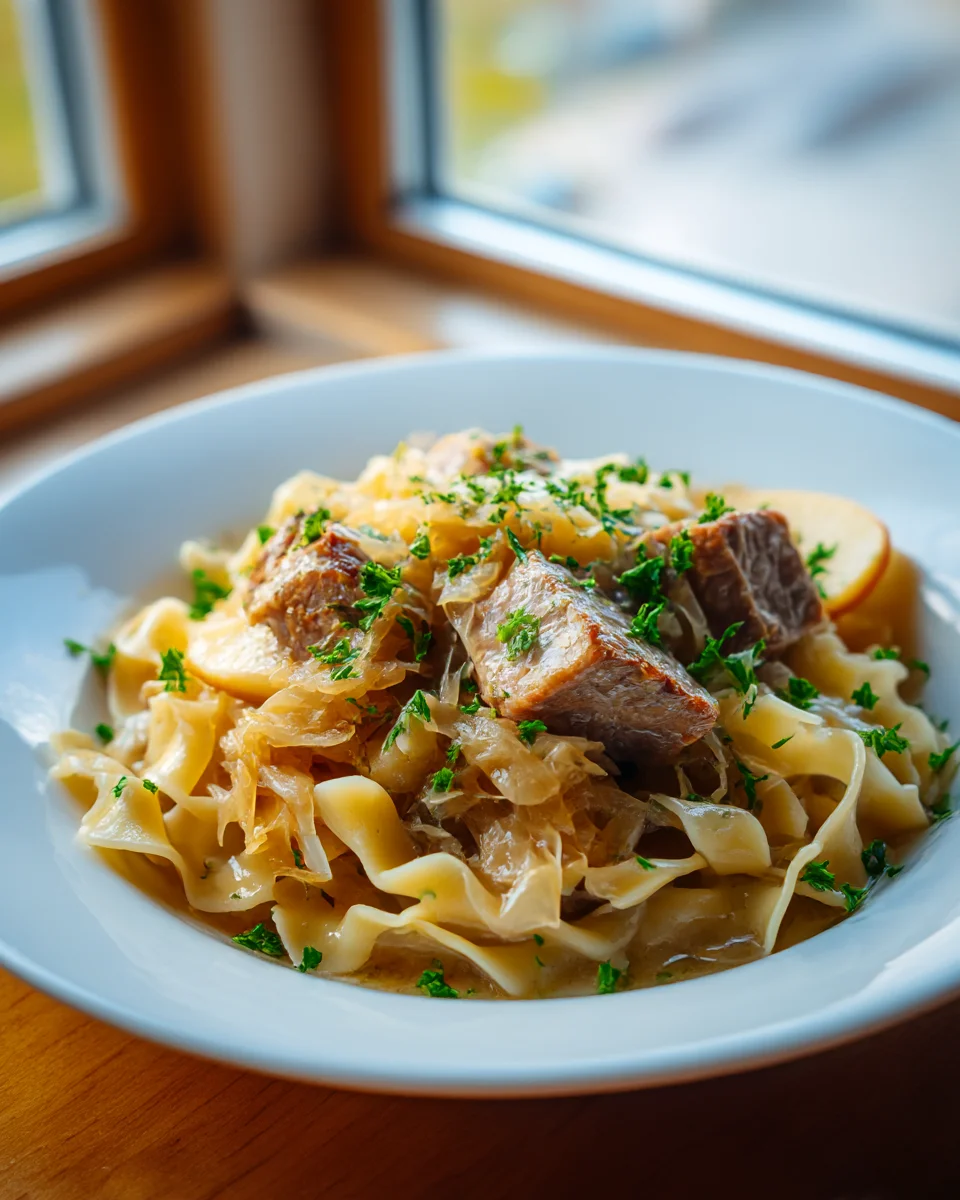
Hey there, comfort food lovers! Today, I am absolutely thrilled to share with you a recipe that has quickly become a cherished favorite in my home: Tender Beef Sauerkraut And Noodles. This isn’t just another dinner; it’s a soulful, deeply satisfying experience that brings together some of the most wonderful flavors and textures.
What makes this dish so special, you ask? It’s the incredible harmony of savory and tangy, all wrapped up in one hearty meal. Imagine succulent, unbelievably tender beef, slow-cooked until it practically melts in your mouth, perfectly balanced by the delightful, bright tang of sauerkraut. And then, to complete this culinary masterpiece, we bring in those comforting, slurpable noodles that soak up all the delicious juices. It’s a complete meal that feels like a warm hug on a plate!
You are going to absolutely adore this recipe because it delivers on every front: flavor, comfort, and satisfaction. It’s the ultimate pick-me-up for a chilly evening or a perfect Sunday supper. We’ll be gently braising beautiful cuts of beef with aromatic vegetables and a rich, savory non-alcoholic broth until fork-tender, then introducing that wonderful, zesty sauerkraut, before finally tossing everything with hearty noodles. Get ready to fall in love with a dish that’s both uniquely delicious and incredibly nourishing.
Ingredient Notes
Creating a truly magnificent “Tender Beef Sauerkraut And Noodles” dish begins with understanding your core ingredients. Each component plays a vital role in achieving that perfect balance of savory, tangy, and comforting flavors.
The Beef
For truly tender beef, I always reach for cuts ideal for slow cooking. My go-to is often a good quality beef chuck roast, cut into 1.5 to 2-inch cubes. Chuck roast has a wonderful marbling that breaks down beautifully over time, yielding incredibly succulent and tender results. Other excellent choices include beef stew meat, which is often pre-cut chuck or round, or even short ribs if you’re looking for an extra rich flavor. When preparing the beef, I make sure to pat it dry thoroughly before seasoning it generously with salt and freshly ground black pepper. This step is crucial for achieving a fantastic sear, which locks in flavor and creates a delicious crust. If you’re short on time, you could even consider using beef short ribs and cooking them until fall-off-the-bone tender, then shredding the meat before incorporating it into the sauerkraut.
The Sauerkraut
The sauerkraut is undeniably the star tang of this dish. I prefer using a good quality, refrigerated sauerkraut rather than canned, as it often has a fresher, more vibrant flavor and better texture. Look for brands with minimal ingredients, ideally just cabbage and salt. When preparing it, I generally drain the sauerkraut well, but I don’t rinse it unless I know I have a particularly tart batch or if I prefer a milder tang. Rinsing too much can wash away some of its characteristic flavor, which we want! If you find your sauerkraut to be excessively sour, a quick rinse under cold water can temper it, but always taste a small amount first to gauge its acidity. A good quality jarred sauerkraut is also a perfectly acceptable substitute.
The Noodles
For the noodle component, I find that wide egg noodles are absolutely perfect. Their broad, flat shape and soft texture are ideal for soaking up the rich, tangy sauce from the beef and sauerkraut. They provide a comforting chew that complements the tender beef wonderfully. When cooking, follow the package directions for al dente, as we don’t want them to become mushy. Other excellent noodle choices include spaetzle for a more authentic German-inspired touch, or even a sturdy pasta like tagliatelle. While I stick to egg noodles for tradition, feel free to experiment with what you enjoy.
Aromatics and Flavor Enhancers
Beyond the core three, a few other ingredients elevate this dish. Onions and garlic form the aromatic base, providing depth. Caraway seeds are non-negotiable for me; their distinctive flavor is quintessential to Eastern European sauerkraut dishes. Beef broth provides the liquid for braising, ensuring our beef becomes incredibly tender and flavorful. For an extra layer of savory depth, a spoonful of tomato paste helps to deepen the color and flavor of the sauce. And, as a wonderful alternative to traditional alcoholic additions, I often use a splash of good quality apple cider vinegar or even a non-alcoholic red wine alternative to deglaze the pan and add a subtle complexity and brightness that balances the richness of the beef. A bay leaf or two also contributes a subtle, herbaceous note during the long simmering process.
Step-by-Step Instructions
Let’s get cooking! This dish is a labor of love, but much of the cooking time is hands-off, allowing the flavors to meld beautifully.
- Prepare the Beef: First, pat your beef chuck roast cubes thoroughly dry with paper towels. This is crucial for a good sear. Season them generously all over with salt and freshly ground black pepper.
- Sear the Beef: In a large, heavy-bottomed pot or Dutch oven, heat about 1-2 tablespoons of olive oil or another high-smoke-point oil over medium-high heat. Once hot, working in batches if necessary to avoid overcrowding, sear the beef cubes on all sides until deeply browned and crusted. This step is vital for developing rich flavor. Remove the seared beef to a plate and set aside.
- Sauté Aromatics: Reduce the heat to medium. Add a little more oil to the pot if needed. Add the chopped onions and cook, stirring occasionally, until softened and translucent, about 5-7 minutes. Stir in the minced garlic and caraway seeds, cooking for another minute until fragrant. Add the tomato paste and cook for 2 minutes, stirring constantly, to deepen its flavor.
- Deglaze and Build the Sauce: Pour in about half a cup of beef broth or a non-alcoholic red wine alternative (or apple cider vinegar) to deglaze the pot, scraping up any browned bits from the bottom with a wooden spoon. These bits are pure flavor!
- Combine and Simmer: Return the seared beef to the pot. Add the drained sauerkraut, the remaining beef broth, and the bay leaf. Stir everything together gently to combine. Bring the mixture to a gentle simmer, then reduce the heat to low, cover the pot tightly, and let it simmer for at least 2 to 2.5 hours, or until the beef is incredibly tender and easily pulls apart with a fork. Check occasionally to ensure there’s enough liquid; if it’s getting too dry, add a splash more broth.
- Cook the Noodles: About 20-30 minutes before the beef is done, bring a large pot of salted water to a rolling boil. Add the wide egg noodles and cook according to package directions until al dente. Drain the noodles well.
- Serve: Once the beef is fall-apart tender, remove the bay leaf. Taste the beef and sauerkraut mixture and adjust seasonings if necessary, adding more salt, pepper, or a pinch of sugar if the sauerkraut is too tart. Serve generous portions of the tender beef and sauerkraut stew over the cooked wide egg noodles. Enjoy!
Tips & Suggestions
To ensure your “Tender Beef Sauerkraut And Noodles” turns out perfectly every time, I’ve gathered a few of my favorite tips and suggestions:
- Embrace the Slow Cook: The key to truly tender beef in this dish is patience. While quicker methods exist, a low and slow simmer on the stovetop or in the oven allows the connective tissues in the beef to break down gradually, resulting in an incredibly succulent texture. Don’t rush this step! If you’re using an Instant Pot, you can achieve similar tenderness in about 45-60 minutes on high pressure, followed by natural release, but I still love the depth of flavor from a long, slow braise.
- Adjust Sauerkraut Tartness: Sauerkraut varies greatly in acidity. Always taste your sauerkraut before adding it to the pot. If it’s very tart and you prefer a milder flavor, give it a quick rinse under cold water. If it’s not tart enough for your liking, you can add a small splash of additional apple cider vinegar or even a squeeze of lemon juice towards the end of cooking. A tiny pinch of sugar can also help balance the acidity without making it sweet.
- Don’t Overcook the Noodles: Wide egg noodles are wonderful for soaking up sauce, but they can quickly turn mushy if overcooked. Cook them just until al dente according to package directions, then drain immediately. You can toss them with a tiny bit of butter or oil to prevent sticking if you’re not serving them right away.
- Make Ahead for Flavor: Like many braised dishes, this “Tender Beef Sauerkraut And Noodles” often tastes even better the next day. The flavors have more time to meld and deepen. You can prepare the beef and sauerkraut stew portion entirely in advance, then simply reheat it gently and cook fresh noodles just before serving.
- Garnish for Freshness: While hearty, this dish benefits from a little freshness. A dollop of sour cream or Greek yogurt on top provides a creamy, cooling contrast to the rich, tangy stew. A sprinkle of fresh chopped parsley or dill also adds a lovely pop of color and herbaceous brightness.
- Serving Suggestions: Beyond the noodles, this dish is hearty enough on its own. However, if you’re looking for a side, a simple green salad with a light vinaigrette or some crusty bread to soak up every last bit of the delicious sauce would be perfect.
Storage
Proper storage is essential to enjoy your delicious “Tender Beef Sauerkraut And Noodles” safely and deliciously for days to come. This is a fantastic dish for meal prepping, as it often tastes even better after a day or two in the refrigerator.
Refrigeration
Once your dish has cooled to room temperature (within about two hours of cooking), transfer any leftovers into airtight containers. I recommend storing the beef and sauerkraut stew separately from the noodles if possible, as noodles can absorb too much liquid and become mushy over time. However, if they are already combined, that’s perfectly fine; just know the noodles might be softer upon reheating. Stored in the refrigerator, the beef and sauerkraut stew will remain fresh for up to 3-4 days. Cooked noodles will last about 2-3 days.
Freezing
The beef and sauerkraut stew freezes beautifully! This makes it an excellent candidate for batch cooking. Let the stew cool completely before transferring it to freezer-safe airtight containers or heavy-duty freezer bags. If using freezer bags, lay them flat for more efficient storage once filled. You can freeze individual portions for easy meal prep. The beef and sauerkraut stew can be stored in the freezer for up to 3 months without significant loss of quality. I do not recommend freezing the cooked noodles, as they tend to become soft and mushy upon thawing and reheating.
Reheating
- From the Refrigerator: To reheat the beef and sauerkraut stew from the refrigerator, simply transfer it to a saucepan or microwave-safe dish. Heat gently over medium-low heat on the stovetop, stirring occasionally, until thoroughly warmed through. In the microwave, heat in 1-2 minute intervals, stirring in between, until hot. If the stew seems a bit thick, you can add a splash of beef broth or water to loosen it. If you have separate noodles, cook a fresh batch or gently reheat your refrigerated noodles in the microwave or a quick dip in boiling water.
- From the Freezer: To reheat the frozen beef and sauerkraut stew, it’s best to thaw it overnight in the refrigerator first. Once thawed, reheat as described above. If reheating from frozen, you can transfer the frozen stew to a pot and heat it over low heat, stirring occasionally, allowing it to thaw and warm slowly. This will take longer. Ensure the stew reaches an internal temperature of 165°F (74°C) for food safety. Cook fresh noodles to serve with the reheated stew for the best texture.
Final Thoughts
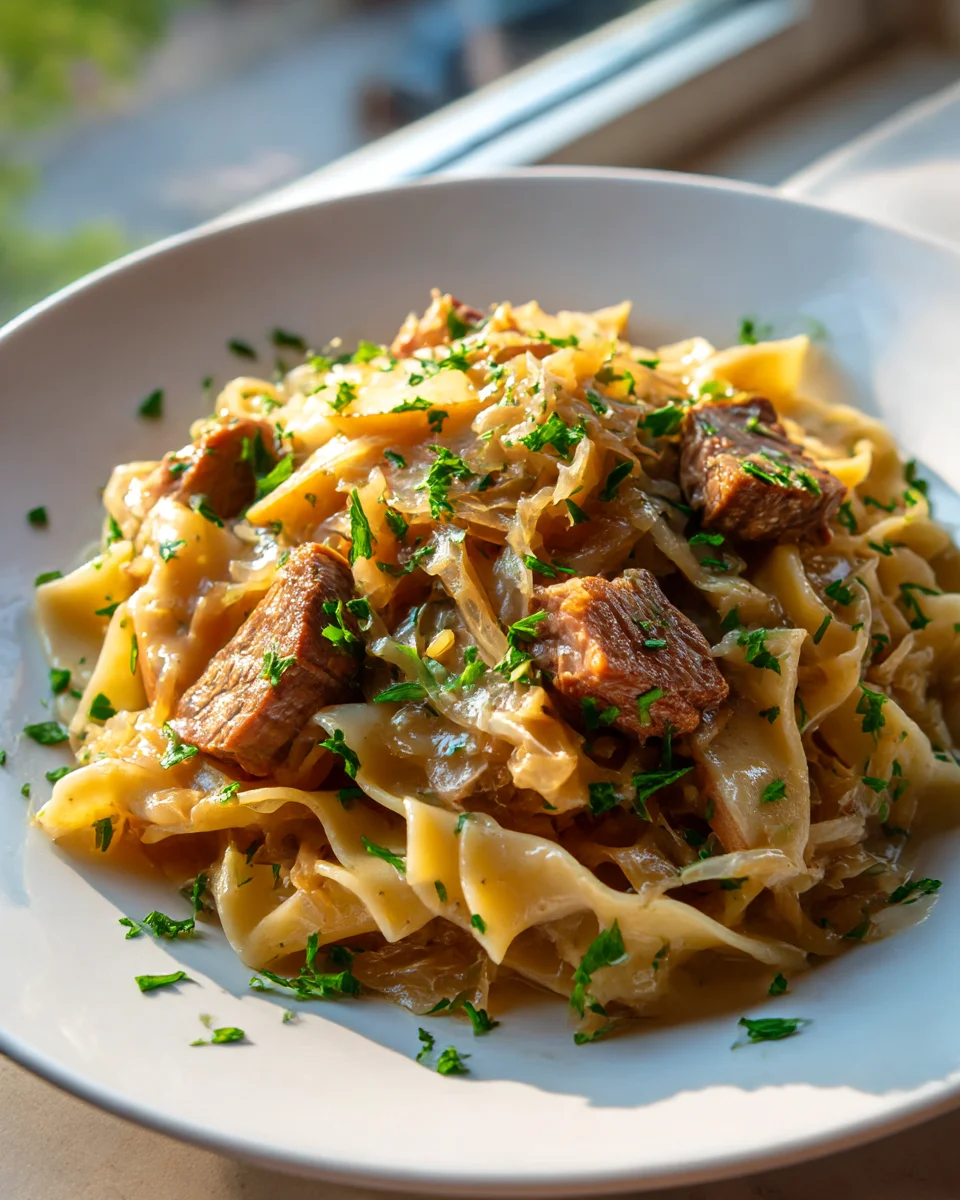
And there you have it! I truly hope you’re as excited as I am to dive into a bowl of this incredible creation. There’s something truly special about Tender Beef Sauerkraut And Noodles that just warms the soul from the very first bite.
This isn’t just a meal; it’s an experience of perfectly braised, melt-in-your-mouth beef, complemented beautifully by the delightful tang of sauerkraut, all nestled amongst tender, satisfying noodles. The rich, savory notes of the beef marry flawlessly with the bright, fermented cabbage, creating a harmony of flavors you won’t soon forget.
It’s hearty, it’s comforting, and it’s surprisingly easy to achieve such depth of flavor. Whether you’re looking for a cozy weeknight dinner or a unique dish to share, Tender Beef Sauerkraut And Noodles is truly a must-try that promises to become a beloved staple in your kitchen. Trust me, your taste buds will thank you!

Best Tender Beef, Sauerkraut & Noodles for Dinner
- Total Time: 17 minute
- Yield: 4 servings 1x
Description
Experience the comforting flavors of Tender Beef, Sauerkraut, and Noodles in this heartwarming dish. Perfect for chilly evenings, it’s a nourishing meal that brings together savory beef, tangy sauerkraut, and slurpable noodles.
Ingredients
- beef chuck roast, cut into 1.5 to 2-inch cubes
- salt
- freshly ground black pepper
- 1–2 tablespoons of olive oil or another high-smoke-point oil
- chopped onions
- minced garlic
- caraway seeds
- tomato paste
- beef broth
- apple cider vinegar or non-alcoholic red wine alternative
- bay leaf
- drained sauerkraut
- wide egg noodles
Instructions
- First, pat your beef chuck roast cubes thoroughly dry with paper towels. This is crucial for a good sear. Season them generously all over with salt and freshly ground black pepper.
- In a large, heavy-bottomed pot or Dutch oven, heat about 1-2 tablespoons of olive oil or another high-smoke-point oil over medium-high heat. Once hot, working in batches if necessary to avoid overcrowding, sear the beef cubes on all sides until deeply browned and crusted. This step is vital for developing rich flavor. Remove the seared beef to a plate and set aside.
- Reduce the heat to medium. Add a little more oil to the pot if needed. Add the chopped onions and cook, stirring occasionally, until softened and translucent, about 5-7 minutes. Stir in the minced garlic and caraway seeds, cooking for another minute until fragrant. Add the tomato paste and cook for 2 minutes, stirring constantly, to deepen its flavor.
- Pour in about half a cup of beef broth or a non-alcoholic red wine alternative (or apple cider vinegar) to deglaze the pot, scraping up any browned bits from the bottom with a wooden spoon.
- Return the seared beef to the pot. Add the drained sauerkraut, the remaining beef broth, and the bay leaf. Stir everything together gently to combine. Bring the mixture to a gentle simmer, then reduce the heat to low, cover the pot tightly, and let it simmer for at least 2 to 2.5 hours, or until the beef is incredibly tender and easily pulls apart with a fork.
- About 20-30 minutes before the beef is done, bring a large pot of salted water to a rolling boil. Add the wide egg noodles and cook according to package directions until al dente. Drain the noodles well.
- Once the beef is fall-apart tender, remove the bay leaf. Taste the beef and sauerkraut mixture and adjust seasonings if necessary, adding more salt, pepper, or a pinch of sugar if the sauerkraut is too tart. Serve generous portions of the tender beef and sauerkraut stew over the cooked wide egg noodles.
- Prep Time: 15 mins
- Cook Time: 2.5 hours
- Category: Dinner
- Method: Braising
- Cuisine: Eastern European
Nutrition
- Serving Size: 1 bowl
- Calories: 600
- Sugar: 5 g
- Sodium: 800 mg
- Fat: 30 g
- Saturated Fat: 10 g
- Unsaturated Fat: 15 g
- Trans Fat: 0 g
- Carbohydrates: 50 g
- Fiber: 4 g
- Protein: 40 g
- Cholesterol: 100 mg
Keywords: The key to truly tender beef in this dish is patience. Adjust the sauerkraut's tartness to your preference and ensure not to overcook the noodles for the best texture.

Leave a Comment