
Delicious Korean Beef Bibimbap Bowl Recipe Youll Love
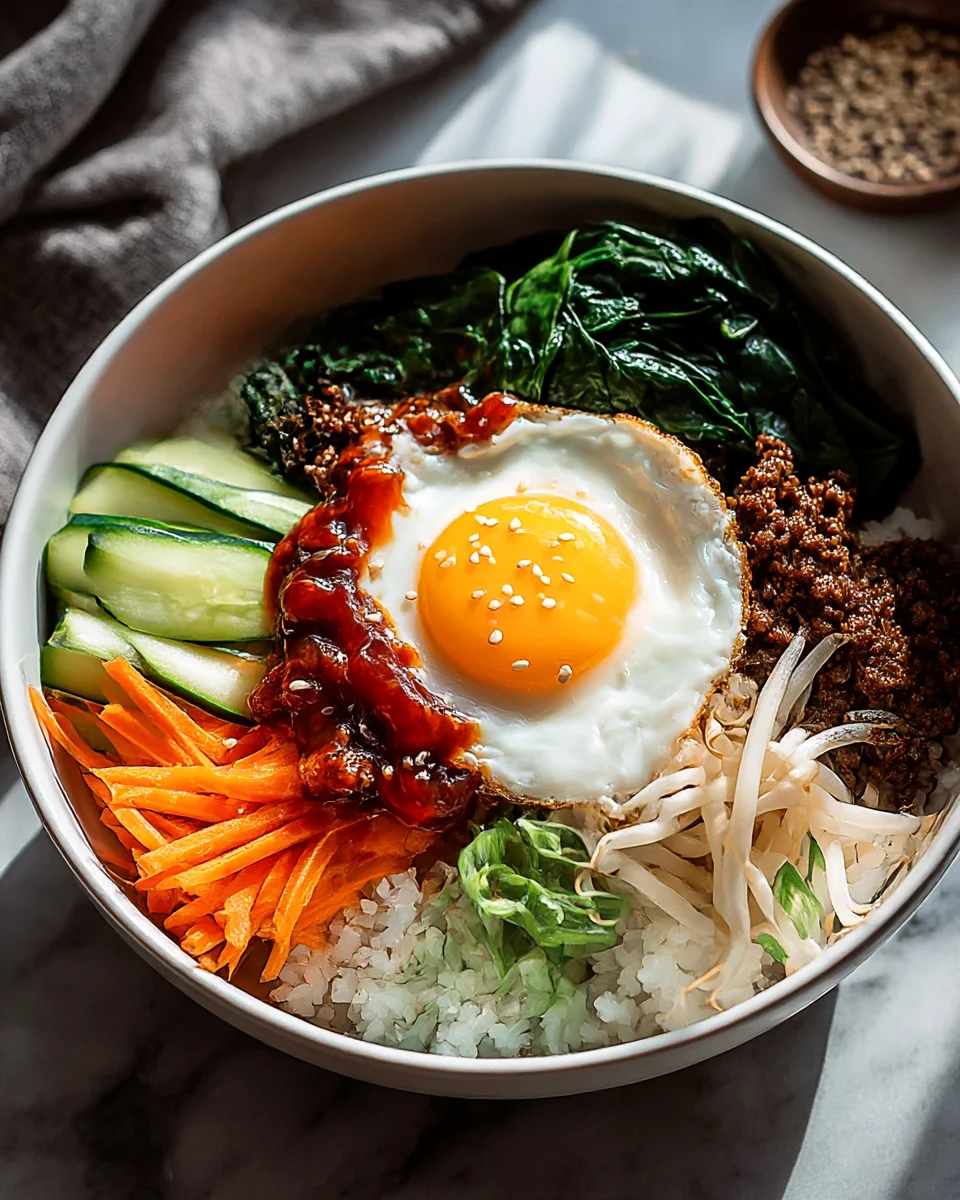
Welcome to my kitchen! Today, I’m thrilled to share a recipe that’s not just a meal, but an experience: the Delicious Korean Beef Bibimbap Bowl Recipe Youll Love. This vibrant dish is a feast for the senses, bursting with color, flavor, and texture. From the tender marinated beef to the crisp vegetables and perfectly cooked rice, each ingredient plays a crucial role in creating a harmonious balance that is simply irresistible.
What makes this bibimbap bowl so special is its versatility. You can customize it to suit your taste, whether you prefer extra spicy gochujang sauce or a milder flavor profile. Plus, it’s a fantastic way to incorporate a variety of fresh vegetables, making it not only delicious but also nutritious! I promise you’ll fall in love with the combination of savory beef, vibrant veggies, and that iconic fried egg on top—it’s the cherry on the cake!
So, gather your ingredients, and let’s dive into the wonderful world of Korean cuisine with this Delicious Korean Beef Bibimbap Bowl Recipe Youll Love. I can’t wait for you to try it and see how it quickly becomes a favorite in your home, just like it has in mine!
Ingredient Notes
When preparing my Delicious Korean Beef Bibimbap Bowl, I focus on fresh, vibrant ingredients that create a beautiful and satisfying dish. Here’s what you’ll need:
- Beef: I use ground beef for this recipe, but you can also opt for thinly sliced steak if you prefer. If you’re looking for a leaner option, ground turkey or chicken can be a great substitute.
- Vegetables: Traditional bibimbap features a variety of colorful vegetables like carrots, spinach, bean sprouts, and zucchini. Feel free to use whatever fresh veggies you have on hand—bell peppers and mushrooms work wonderfully too.
- Egg: A fried or poached egg is a must for that rich, creamy addition. For a vegan option, you can use a tofu scramble or a plant-based egg substitute.
- Rice: I prefer using short-grain white rice for its sticky texture, but brown rice or cauliflower rice can be excellent alternatives if you’re seeking a healthier twist.
- Gochujang: This Korean chili paste adds a wonderful depth of flavor and heat. If you’re sensitive to spice, you can reduce the amount or mix it with a little honey for sweetness.
- Sesame oil: A drizzle of toasted sesame oil enhances the dish’s flavor. If you need a substitute, avocado oil can work in a pinch.
Step-by-Step Instructions
Creating the Delicious Korean Beef Bibimbap Bowl is straightforward and enjoyable. Here’s how to whip it up:
- Prepare the Rice: Start by cooking your rice according to the package instructions. I usually make enough for a few servings so I can enjoy leftovers!
- Cook the Beef: In a skillet over medium heat, add a splash of oil and brown your ground beef until fully cooked. Drain any excess fat. Stir in gochujang, soy sauce, and a teaspoon of sesame oil, mixing well. Let it simmer for a few minutes to absorb the flavors.
- Sauté the Vegetables: In a separate pan, heat a bit of oil and sauté each vegetable individually until tender but still vibrant. I usually start with the carrots, then add the zucchini, and finish with the spinach and bean sprouts, seasoning them lightly with salt.
- Fry the Egg: In the same skillet, crack an egg and cook it sunny-side up or to your liking. The runny yolk will add a creamy texture to the dish.
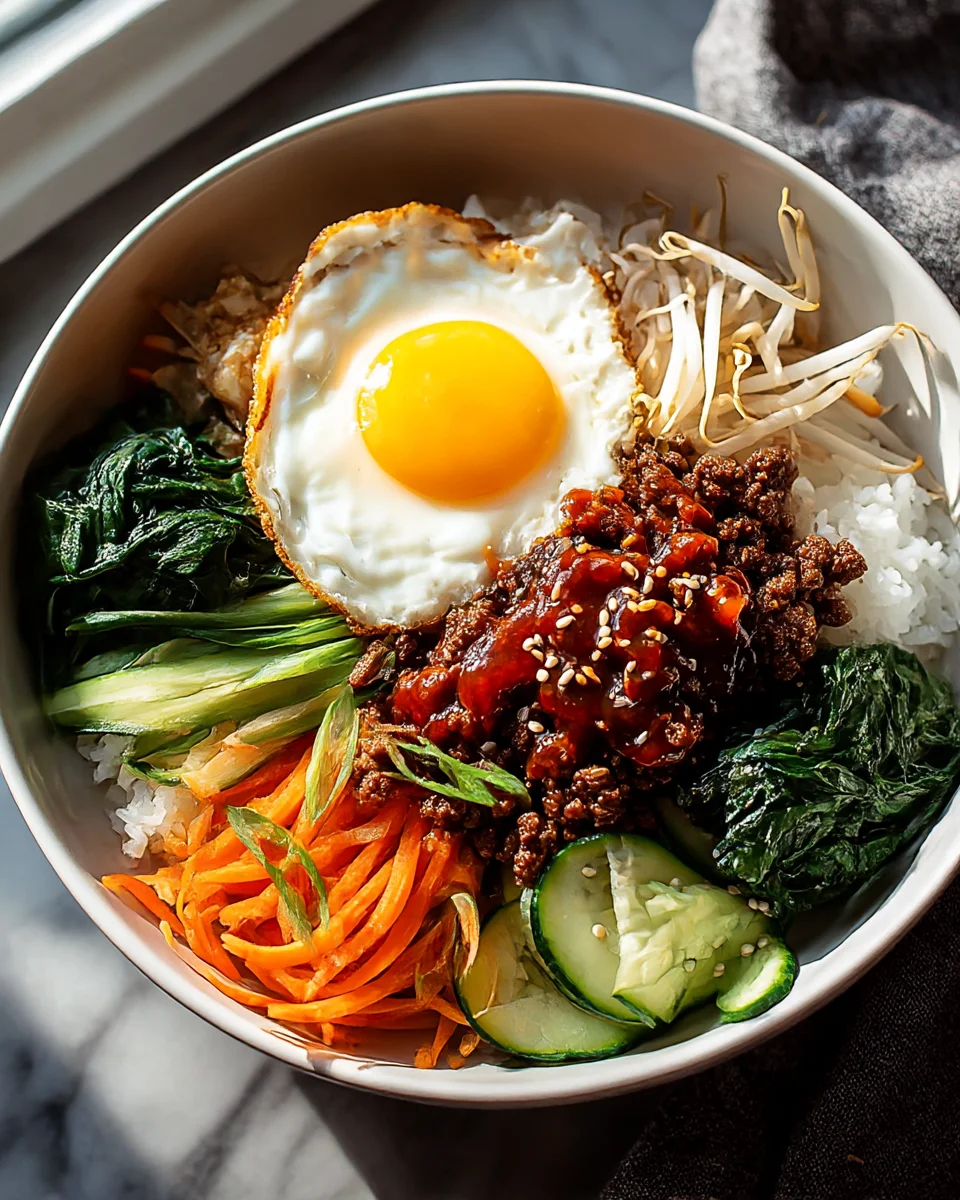
- Assemble the Bowl: In a large bowl, place a serving of rice at the bottom. Top it with the seasoned beef, sautéed vegetables, and the fried egg. Drizzle with more sesame oil and a generous dollop of gochujang.
- Garnish: For extra flavor and crunch, sprinkle some sesame seeds and sliced green onions on top.
Tips & Suggestions
Here are some tips to elevate your Delicious Korean Beef Bibimbap Bowl:
- Veggie Variations: Don’t hesitate to experiment with seasonal vegetables or whatever you have on hand. The more colorful, the better!
- Meal Prep: This dish is perfect for meal prep. You can cook the beef and vegetables in advance and store them separately. Just reheat them and assemble when you’re ready to eat.
- Customize Your Heat: Adjust the amount of gochujang according to your taste preference. If you enjoy spice, feel free to add more!
- Make it Vegan: To make this bibimbap vegan, simply replace the beef with sautéed mushrooms or marinated tofu, and skip the egg for a delicious plant-based version.
Storage
Storing your Delicious Korean Beef Bibimbap Bowl is easy and convenient:
- Refrigeration: Store any leftovers in airtight containers in the refrigerator for up to 3 days. Keep the components separate until you’re ready to eat for the best texture.
- Freezing: If you want to freeze the beef, it can be stored in a freezer-safe container for up to 3 months. Just reheat it thoroughly before serving.
- Reheating: Reheat the rice and beef in the microwave or on the stovetop. For the vegetables, a quick sauté can help revive their freshness.
Enjoy your Delicious Korean Beef Bibimbap Bowl! It’s a delightful mix of flavors and textures that will surely become a favorite in your home.
Final Thoughts
If you’re looking for a dish that brings vibrant flavors and an array of textures to your table, then the Delicious Korean Beef Bibimbap Bowl Recipe Youll Love is an absolute must-try! This recipe not only showcases the rich and savory taste of marinated beef but also allows you to customize each bowl with your favorite vegetables, creating a colorful and nourishing meal. The combination of the warm rice, tender beef, and fresh toppings, all brought together with a drizzle of spicy gochujang, makes for a delightful experience that will surely impress family and friends alike. So gather your ingredients, embrace the joy of cooking, and enjoy every delicious bite of this Korean classic. I promise, the Delicious Korean Beef Bibimbap Bowl Recipe Youll Love will quickly become a favorite in your home!

Delicious Korean Beef Bibimbap Bowl Recipe You’ll Adore
- Total Time: 45 minutes
- Yield: 4 servings
Description
This Delicious Korean Beef Bibimbap Bowl is a vibrant dish bursting with color, flavor, and texture. Enjoy the combination of savory beef, fresh vegetables, and a fried egg on top for a truly irresistible meal.
Ingredients
- Ground beef
- Carrots
- Spinach
- Bean sprouts
- Zucchini
- Bell peppers
- Mushrooms
- Egg
- Short-grain white rice
- Brown rice
- Cauliflower rice
- Gochujang
- Sesame oil
- Avocado oil (optional)
Instructions
- Prepare the Rice: Start by cooking your rice according to the package instructions. I usually make enough for a few servings so I can enjoy leftovers!
- Cook the Beef: In a skillet over medium heat, add a splash of oil and brown your ground beef until fully cooked. Drain any excess fat. Stir in gochujang, soy sauce, and a teaspoon of sesame oil, mixing well. Let it simmer for a few minutes to absorb the flavors.
- Sauté the Vegetables: In a separate pan, heat a bit of oil and sauté each vegetable individually until tender but still vibrant. I usually start with the carrots, then add the zucchini, and finish with the spinach and bean sprouts, seasoning them lightly with salt.
- Fry the Egg: In the same skillet, crack an egg and cook it sunny-side up or to your liking. The runny yolk will add a creamy texture to the dish.
- Assemble the Bowl: In a large bowl, place a serving of rice at the bottom. Top it with the seasoned beef, sautéed vegetables, and the fried egg. Drizzle with more sesame oil and a generous dollop of gochujang.
- Garnish: For extra flavor and crunch, sprinkle some sesame seeds and sliced green onions on top.
- Prep Time: 15 mins
- Cook Time: 30 mins
- Category: Dinner
- Method: Stovetop
- Cuisine: Korean
Nutrition
- Serving Size: 1 bowl
- Calories: 600
- Sugar: 5 g
- Sodium: 800 mg
- Fat: 30 g
- Saturated Fat: 10 g
- Unsaturated Fat: 15 g
- Trans Fat: 0 g
- Carbohydrates: 60 g
- Fiber: 5 g
- Protein: 25 g
- Cholesterol: 200 mg
Keywords: Feel free to experiment with seasonal vegetables or whatever you have on hand. This dish is perfect for meal prep; you can cook the beef and vegetables in advance and store them separately.


Leave a Comment